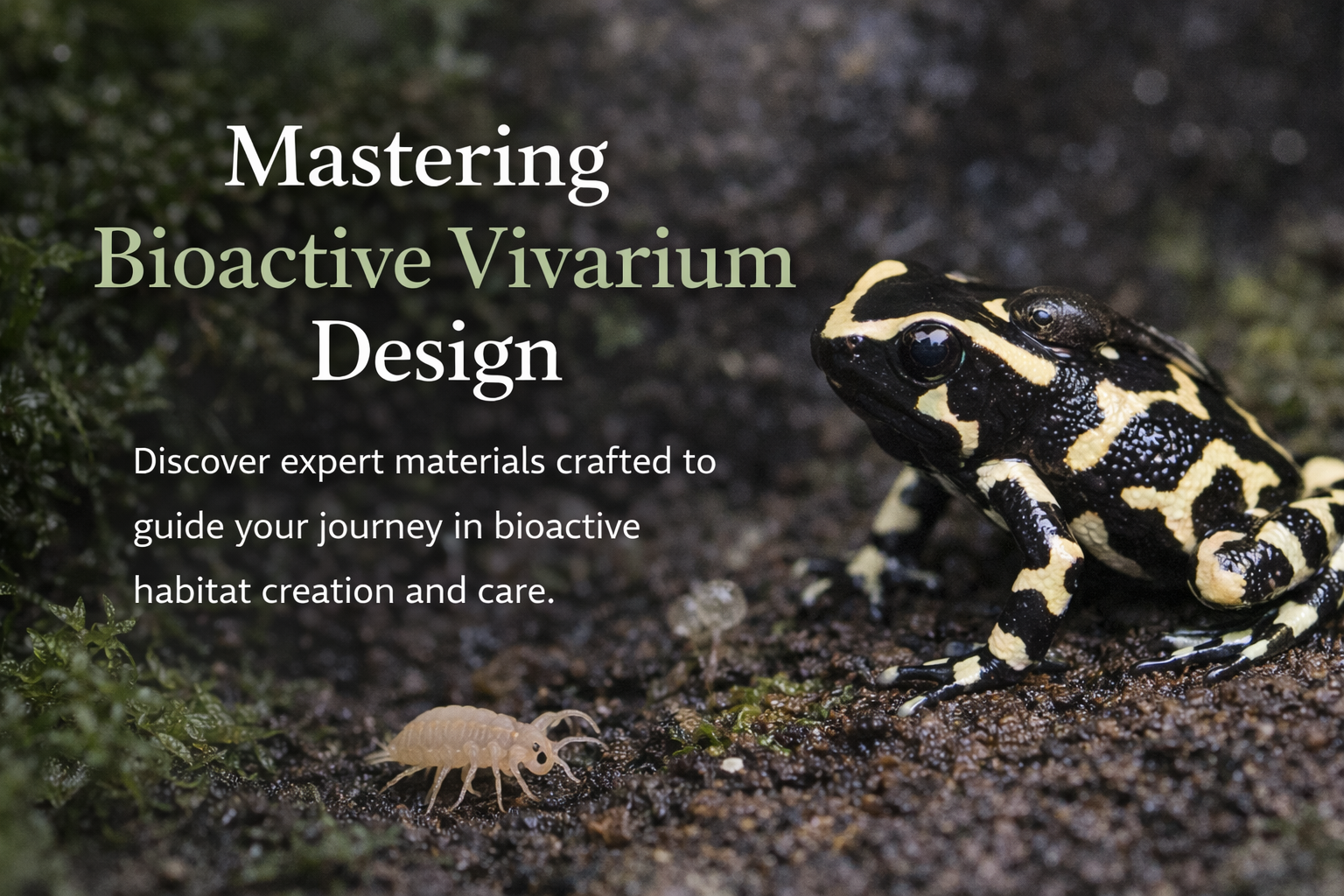
Mastering Bioactive Vivarium Design
Discover expert materials crafted to guide your journey in bioactive habitat creation and care.

Habitat Fundamentals
Understand the vital principles behind sustainable vivarium ecosystems.

Advanced Maintenance
Explore expert techniques for keeping your bioactive vivarium thriving.

Sustainability Practices
Gain insights into eco-friendly enclosure management and animal welfare.
Bioactive Vivarium Academy Courses
Learn how bioactive systems actually work — not just how to copy a setup.
Bioactive vivariums aren’t just about adding plants and bugs. They’re living systems, and when you understand the why behind each layer, decision, and process, your enclosures become more stable, healthier, and easier to maintain.
The Bioactive Vivarium Academy courses are designed to teach principles, not recipes — so you can confidently design, build, and maintain bioactive systems for a wide range of species.
Who These Courses Are For
These courses are suitable if you:
- Are new to bioactive vivariums and want to start the right way
- Have built bioactive setups before, but struggled with mould, plant failure, or instability
- Keep amphibians, reptiles, or invertebrates and want to prioritise animal welfare
- Want to understand soil biology, microfauna, and ecosystem balance — not just aesthetics
- Are tired of conflicting advice and want clear, evidence-based guidance
No prior qualifications are required. Everything is explained clearly, step by step.
What You’ll Learn
Across the Academy courses, you’ll gain a solid understanding of:
- How bioactive ecosystems function as closed or semi-closed systems
- Substrate layers: drainage, soil structure, aeration, and long-term stability
- Microfauna selection, population management, and failure points
- Plant selection based on environment, not just appearance
- Lighting, humidity, airflow, and how they interact
- Designing systems that are easier to maintain over time
- Common mistakes that cause bioactive setups to fail — and how to avoid them
This knowledge applies whether you’re keeping dart frogs, geckos, invertebrates, or mixed systems.
Course Structure & Learning Style
Courses are delivered through:
- Clear, structured lessons
- Visual explanations and diagrams where helpful
- Practical examples drawn from real-world setups
- Plain-English explanations — no unnecessary jargon
You’ll learn how to think about bioactive design, not just what to copy.
Start with the Foundations
If you’re new to bioactive systems, we strongly recommend starting with a foundational course before moving on to more specialised topics.
Understanding the fundamentals makes every future build more successful.
👉 Browse available courses below and start learning at your own pace.
Why Bioactive Vivarium Academy?
Unlike quick guides or social media advice, the Academy focuses on:
- Animal-centred design, not trends
- Long-term stability over short-term aesthetics
- Understanding cause and effect in living systems
- Teaching transferable skills, not one-off setups
This approach helps you make better decisions — even when something goes wrong.
Eco-Friendly Terrarium Techniques for Hobbyists
Find clear, concise answers to frequent queries about bioactive vivarium care and setup here.
What defines a bioactive vivarium?
A bioactive vivarium is a self-sustaining enclosure that mimics natural habitats using live plants, microorganisms, and invertebrates.
How often should I maintain my terrarium?
Routine spot cleaning weekly and a deeper maintenance every few months keeps your setup balanced and healthy.
What are the benefits of a bioactive setup?
These setups promote natural behaviours, improve animal welfare, and reduce enclosure maintenance over time.
Can I use any substrate in my vivarium?
Choosing substrates depends on your species’ needs and ecosystem balance; we recommend natural, organic options.
Do I need special lighting for bioactive terrariums?
Yes, appropriate lighting supports plant growth and animal health, replicating natural day-night cycles.
How do I introduce cleanup crews safely?
Add detritivores gradually, ensuring they are compatible with your enclosure’s inhabitants and conditions.
Explore Our Approach
Discover our clear, step-by-step guide to designing and maintaining thriving bioactive vivariums, empowering you to create naturalistic habitats with confidence.

Step One: Planning Your Vivarium
Begin by understanding your chosen species’ needs and selecting the right enclosure setup to build a sustainable, healthy environment.

Step Two: Building & Setup
Learn to assemble your vivarium layers, incorporate bioactive substrates, and introduce appropriate plants and fauna for a balanced ecosystem.

Step Three: Ongoing Care
Master the techniques of monitoring, maintaining humidity, and ensuring animal welfare to keep your bioactive vivarium thriving long-term.