
Bioactive Vivarium Academy
Learn the science behind living enclosures
Category: Advice
-

Choose the level that matches your responsibility, not your ambition. Training levels are often marketed like a ladder: fundamentals, advanced, practitioner. In amphibian keeping, this can be misleading if you assume “advanced” simply means better. The truth is that each level teaches a different kind of competence. The right choice depends on what you keep,…
-
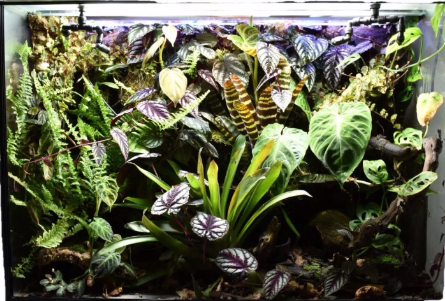
Bioactive vivariums are often described as self-sustaining, low-maintenance systems. When they succeed, they can be stable, functional, and deeply rewarding. When they fail, the problems are rarely sudden — but they are common. Persistent mould, declining clean-up crews, rotting plants, unpleasant odours, or animals that never seem to thrive are all signs that something in…
-
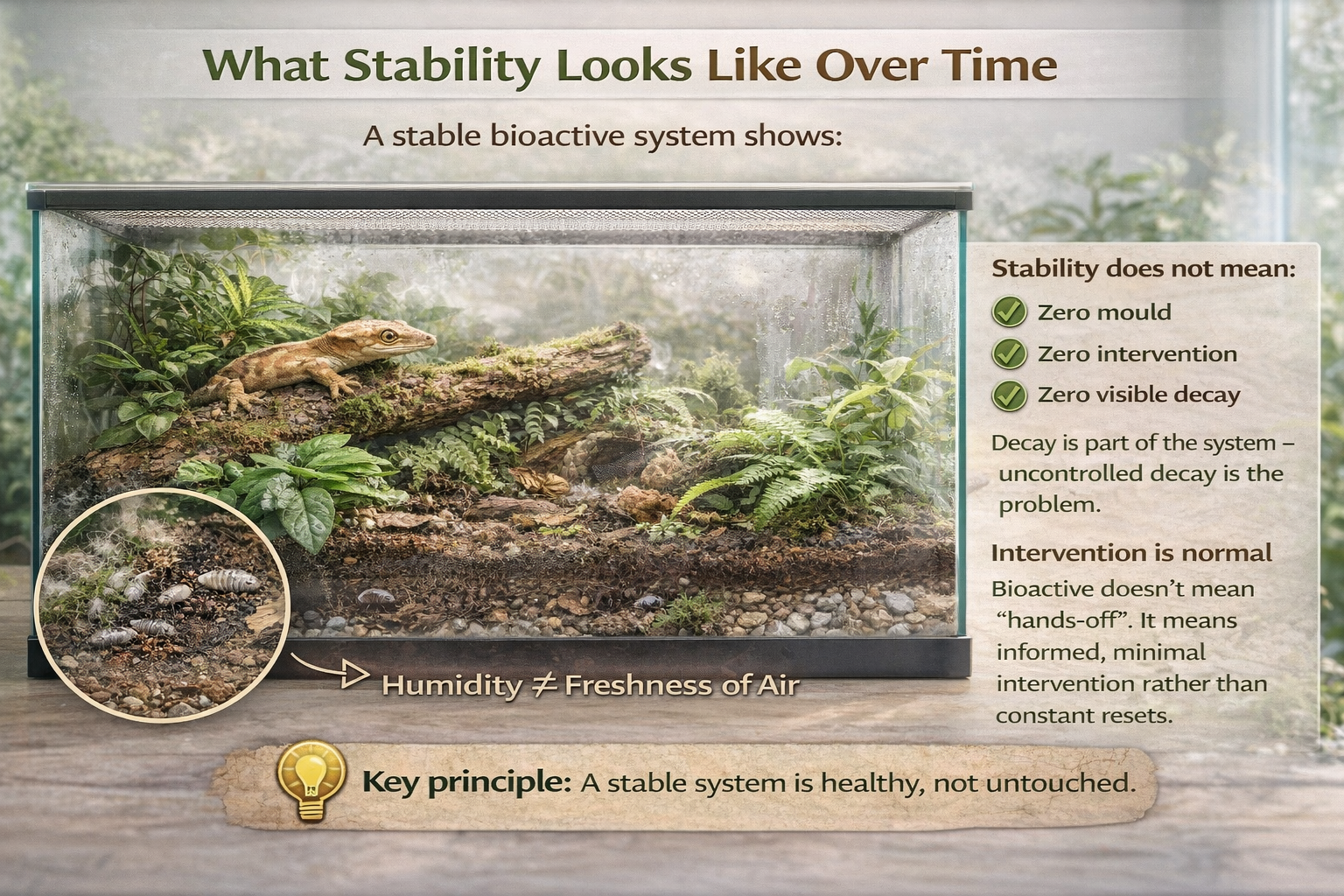
The term bioactive vivarium is used widely, but often loosely. In recent years it has come to describe almost any enclosure that includes plants and a clean-up crew. While these elements are important, they do not on their own make a system truly bioactive. A genuinely bioactive vivarium is not defined by what it contains,…